Skip to main content
O/L Home Economics Study Guide 2026 | PaperMaster.lk | PaperMaster LK
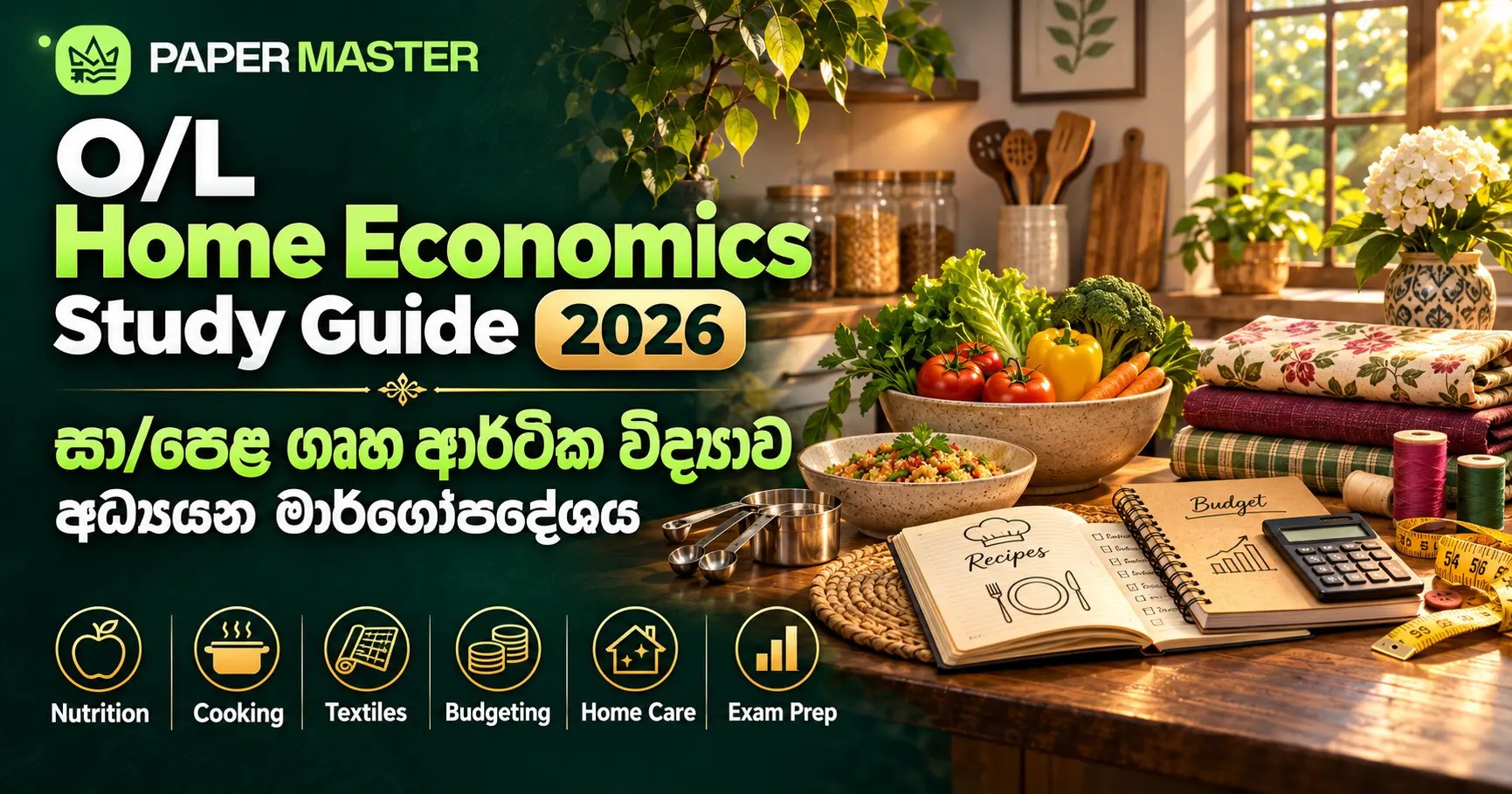
Home Study Guides O/L Home Economics Study Guide 2026 – Complete Revision Guide A complete O/L Home Economics Study Guide for Sri Lankan students covering nutrition, food preparation, family resource management, clothing, textiles, home management, consumer education, safety, past paper practice and exam preparation for the 2026 examination.
O/L Home Economics Study Guide 2026 This O/L Home Economics Study Guide is designed to help Sri Lankan students revise the important concepts and practical knowledge required for the G.C.E. Ordinary Level Home Economics examination.
Home Economics becomes easier when students connect what they learn with everyday activities such as nutrition, food preparation, clothing, household management, budgeting and family well-being.
What You Will Learn 1. Understanding Home Economics Home Economics focuses on knowledge and skills that help individuals and families manage daily life effectively.
It includes areas such as:
Ready to practise?
Browse past papers More study guides O/L English Literature Study Guide 2026 – Complete Revision Guide
A complete O/L English Literature Study Guide for Sri Lankan students covering poetry, prose, drama, literary techniques, character analysis, themes, quotation use, essay writing, past paper practice and exam preparation for the 2026 examination.
O/L Dancing Study Guide 2026 – Complete Revision Guide
A complete O/L Dancing Study Guide for Sri Lankan students covering basic dance movements, rhythm, traditional Sri Lankan dance forms, costumes, drums, performance skills, choreography, dance appreciation, past paper practice and exam preparation for the 2026 examination.
O/L Music Study Guide 2026 – Complete Revision Guide
A complete O/L Music Study Guide for Sri Lankan students covering musical elements, rhythm, melody, notation, instruments, vocal techniques, Sri Lankan traditional music, music appreciation, past paper practice and exam preparation for the 2026 examination.
Important Tip Try to connect each lesson with situations you experience at home.
Practical examples can make your answers easier to understand and remember.
2. Nutrition Nutrition is important for growth, development and good health.
Students should understand the main nutrients required by the body:
Students should also understand the function and common food sources of each nutrient.
Nutrition Tip Do not memorize nutrient names only.
Learn what each nutrient does in the body and identify common foods that provide it.
3. Balanced Diet A balanced diet provides the body with suitable amounts of different nutrients.
When planning a balanced diet, consider:
A balanced diet should contain suitable foods from different food groups.
4. Meal Planning Meal planning helps ensure that meals are nutritious, suitable and economical.
Students should consider:
Important Tip A good meal plan should balance nutrition, cost and practicality.
5. Food Preparation Correct food preparation helps maintain food quality and nutritional value.
Students should understand basic methods such as:
Different cooking methods can affect the taste, texture and nutritional value of food.
6. Food Safety and Hygiene Food should be prepared and stored safely.
Important practices include:
Poor food hygiene can cause contamination and illness.
7. Food Preservation Food preservation helps extend the period during which food remains suitable for consumption.
Revision Tip Understand why each preservation method helps slow food spoilage.
8. Family Resource Management Families have limited resources that should be managed carefully.
Good resource management helps families meet their needs efficiently.
9. Household Budgeting A budget is a plan for managing income and expenses.
Students should understand:
Budgeting Tip A good budget should help meet important needs while allowing for savings whenever possible.
10. Consumer Education Consumers make decisions when purchasing goods and services.
A responsible consumer should consider:
Students should also understand the importance of consumer rights and responsibilities.
11. Clothing and Textiles Clothing is an important area of Home Economics.
Students should understand:
Different fabrics have different characteristics and uses.
12. Garment Care Proper garment care can help clothing last longer.
Important practices include:
Important Tip The correct care method depends on the fabric and garment type.
13. Home Management Good home management helps create a comfortable, safe and organized living environment.
Students should understand how effective planning can reduce unnecessary work and waste.
14. Safety in the Home Many household accidents can be prevented through careful behaviour.
Students should understand safety related to:
Safety Tip Preventing an accident is better than dealing with its consequences.
Always identify potential hazards before using household equipment.
15. Family Well-Being A healthy family environment supports physical, emotional and social well-being.
Important values include:
Good relationships can help create a supportive home environment.
16. Time Management Effective time management helps complete household, study and personal activities efficiently.
Useful practices include:
Time is an important resource and should be used wisely.
17. Sustainable Living Households can contribute to environmental protection through responsible choices.
Important practices include:
Sustainable living benefits both families and the environment.
18. Practical Questions Home Economics may include questions that require students to apply knowledge to practical situations.
Use clear and realistic examples whenever possible.
19. Past Paper Practice Past paper practice is one of the best ways to prepare for the O/L Home Economics examination.
Past papers help students understand how Home Economics concepts are tested in different situations.
Common Mistakes to Avoid
Exam Preparation Tips
Final Advice Home Economics becomes easier when you connect textbook knowledge with real everyday activities.
Understand how nutrition, food preparation, budgeting, clothing, household management and family well-being contribute to a better quality of life.
Regular revision, practical examples and past paper practice will help improve both your knowledge and confidence before the examination.
Use PaperMaster.lk to access past papers, model papers, study guides and educational resources for your O/L examination preparation.
Good luck with your studies and your 2026 O/L examination!