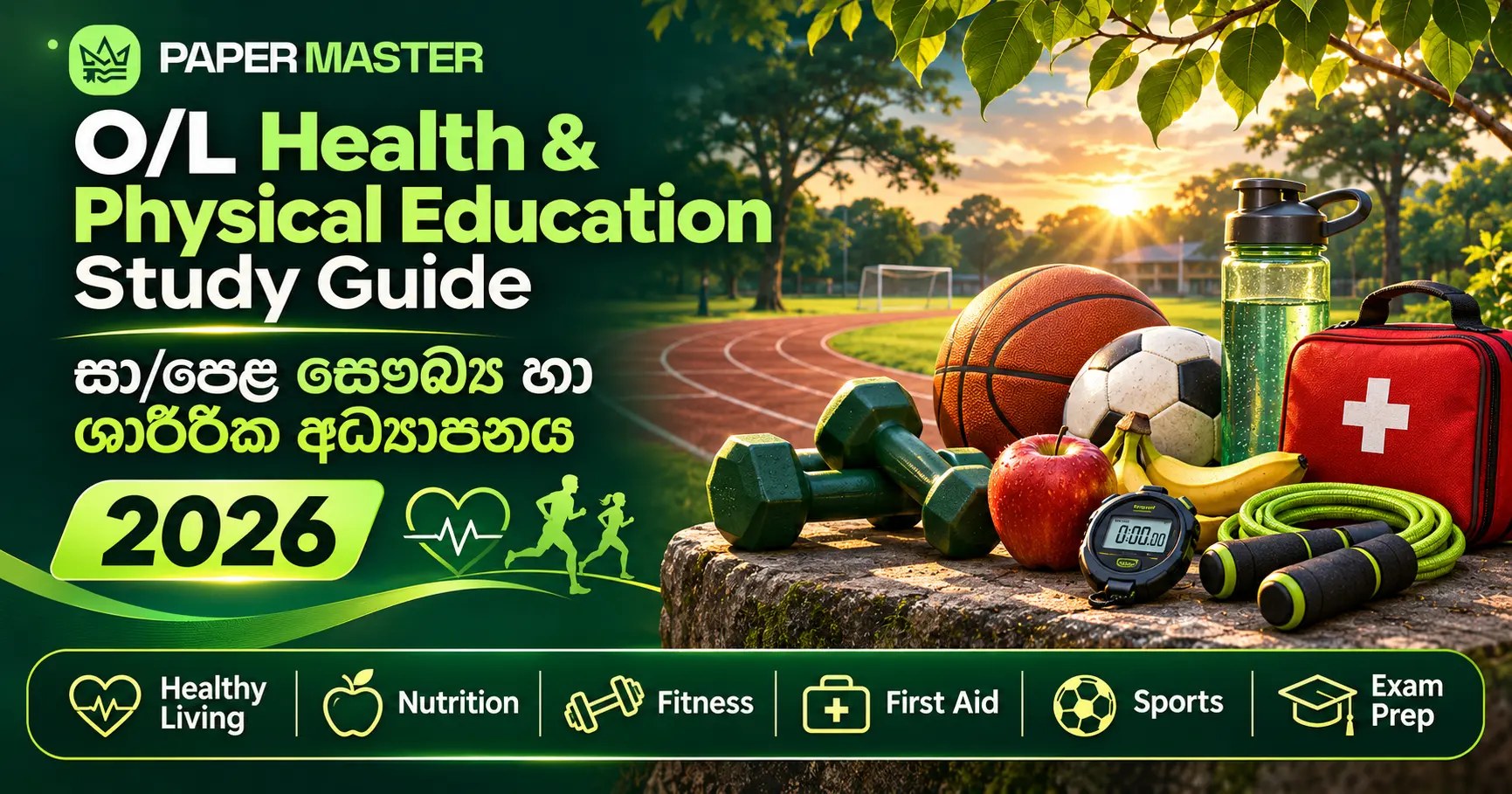
O/L Health & Physical Education Study Guide 2026 – Complete Revision Guide
A complete O/L Health & Physical Education Study Guide for Sri Lankan students covering healthy lifestyles, nutrition, physical fitness, sports, personal hygiene, first aid, mental well-being, past paper practice and exam preparation for the 2026 examination.
O/L Health & Physical Education Study Guide 2026
This O/L Health & Physical Education Study Guide is designed to help Sri Lankan students revise the important health, fitness and physical education concepts required for the G.C.E. Ordinary Level examination.
The subject becomes easier when students connect the lessons with everyday habits, physical activities, sports and healthy lifestyle choices instead of simply memorizing definitions.
What You Will Learn
Healthy lifestyle habits
Personal health and hygiene
Nutrition and balanced diets
Physical fitness
Exercise and training
Sports skills and rules
First aid and injury prevention
Mental and emotional well-being
Healthy relationships and social well-being
Environmental health
Past paper preparation
Exam time management
1. Understanding Health
Health is more than simply being free from illness.
A healthy person should maintain well-being in different areas of life, including:
Students should understand how these areas are connected.
Important Tip
When answering health-related questions, try to use practical examples from everyday life.
This can make your explanation clearer and easier to remember.
2. Personal Health and Hygiene
Good personal hygiene helps protect the body from illness and supports overall well-being.
Important habits include:
Bathing regularly
Washing hands properly
Maintaining oral hygiene
Wearing clean clothes
Keeping nails clean
Maintaining clean hair and skin
Using clean food and drinking water
Getting enough sleep
Students should understand why these habits are important rather than simply listing them.
3. Nutrition and a Balanced Diet
Nutrition plays an important role in growth, energy and good health.
Students should understand the main nutrients required by the body, including:
Carbohydrates
Proteins
Fats
Vitamins
Minerals
Water
Dietary fibre
A balanced diet contains suitable amounts of different nutrients according to a person's age, activity level and needs.
Nutrition Tip
When revising nutrition, learn both the function of each nutrient and common food sources.
4. Healthy Eating Habits
Healthy eating involves making suitable food choices and maintaining good eating habits.
Important practices include:
Eating a balanced diet
Eating fruits and vegetables regularly
Drinking enough water
Avoiding excessive sugar
Limiting highly processed foods
Eating appropriate portions
Eating meals at suitable times
Students should understand how unhealthy eating habits may affect long-term health.
5. Physical Fitness
Physical fitness is the ability to perform daily activities effectively without unnecessary fatigue.
Important fitness components may include:
Strength
Endurance
Flexibility
Speed
Balance
Coordination
Agility
Important Tip
Understand what each fitness component means and identify activities that can help improve it.
6. Exercise and Physical Activity
Regular physical activity supports both physical and mental well-being.
Benefits may include:
Improving cardiovascular fitness
Strengthening muscles and bones
Maintaining a healthy body composition
Improving flexibility
Supporting mental well-being
Improving sleep
Increasing energy levels
Students should also understand the importance of warming up and cooling down before and after physical activity.
7. Sports and Games
Sports help develop physical skills, teamwork, discipline and leadership.
Students should understand:
Basic rules
Sportsmanship
Teamwork
Leadership
Fair play
Safety
Respect for officials and other players
Sportsmanship Tip
Winning is not the only goal of sport.
Fair play, respect, discipline and teamwork are also important.
8. Injury Prevention
Sports and exercise should be performed safely.
Ways to reduce the risk of injuries include:
Warming up properly
Using suitable equipment
Wearing appropriate clothing and footwear
Following rules
Using correct techniques
Staying hydrated
Avoiding excessive training
Resting when necessary
Safety should always be considered before, during and after physical activities.
9. Basic First Aid
First aid is the immediate assistance given to a person who has been injured or suddenly becomes unwell until appropriate medical help is available.
Students should understand the importance of:
Remaining calm
Checking the situation for danger
Getting help when necessary
Avoiding actions that may make an injury worse
Using appropriate basic first-aid measures
Important Note
Serious injuries and medical emergencies require professional medical assistance.
10. Mental and Emotional Well-Being
Mental well-being is an important part of overall health.
Students should understand healthy ways to manage everyday stress and emotions, such as:
Getting enough rest
Organizing time effectively
Talking to trusted people
Participating in enjoyable activities
Exercising regularly
Developing positive relationships
Asking for help when necessary
Good mental well-being supports learning, relationships and daily activities.
11. Social Health
Social health refers to the ability to build and maintain healthy relationships with other people.
Important qualities include:
Respect
Cooperation
Communication
Empathy
Responsibility
Helping others
Resolving conflicts peacefully
These qualities are important at home, at school and in the wider community.
12. Healthy Environment
The environment can have a major effect on health.
Students should understand the importance of:
Clean water
Clean air
Proper waste disposal
Sanitation
Safe food
Clean surroundings
Controlling pollution
Preventing the spread of disease
Protecting the environment also contributes to protecting human health.
13. Healthy Lifestyle Choices
Daily choices can influence health over a long period.
Healthy lifestyle habits include:
Being physically active
Eating nutritious foods
Getting enough sleep
Maintaining personal hygiene
Managing stress
Avoiding harmful habits
Maintaining healthy relationships
Small positive habits practiced consistently can make a major difference.
14. Time Management and Study Health
Students also need to maintain healthy study habits.
Useful practices include:
Creating a study schedule
Taking short breaks
Maintaining good posture
Sleeping adequately
Keeping hydrated
Avoiding extremely long study sessions
Balancing study and rest
Good health can improve concentration and learning performance.
15. Past Paper Practice
Past paper practice is one of the best ways to prepare for the O/L Health & Physical Education examination.
Try to:
Complete past papers regularly
Practice multiple-choice questions
Practice structured questions
Identify frequently tested lessons
Review incorrect answers
Create short notes for weak areas
Practice within the examination time
Past papers help students understand how health and physical education concepts are tested.
Common Mistakes to Avoid
Memorizing definitions without understanding them
Giving incomplete explanations
Writing unrelated information
Confusing different fitness components
Ignoring safety when answering sports questions
Not providing practical examples
Reading questions too quickly
Spending too much time on one question
Exam Preparation Tips
Create a weekly revision schedule
Study one topic at a time
Prepare short notes
Revise important definitions
Connect lessons with real-life examples
Practice structured answers
Complete past papers
Review mistakes
Manage examination time carefully
Final Advice
Health & Physical Education becomes easier when you connect the lessons with your everyday life.
Understand why healthy habits, physical activity, safety, good nutrition and positive relationships are important rather than relying only on memorization.
Regular revision and past paper practice will help improve both your knowledge and confidence before the examination.
Use PaperMaster.lk to access past papers, model papers, study guides and educational resources for your O/L examination preparation.
Good luck with your studies and your 2026 O/L examination!