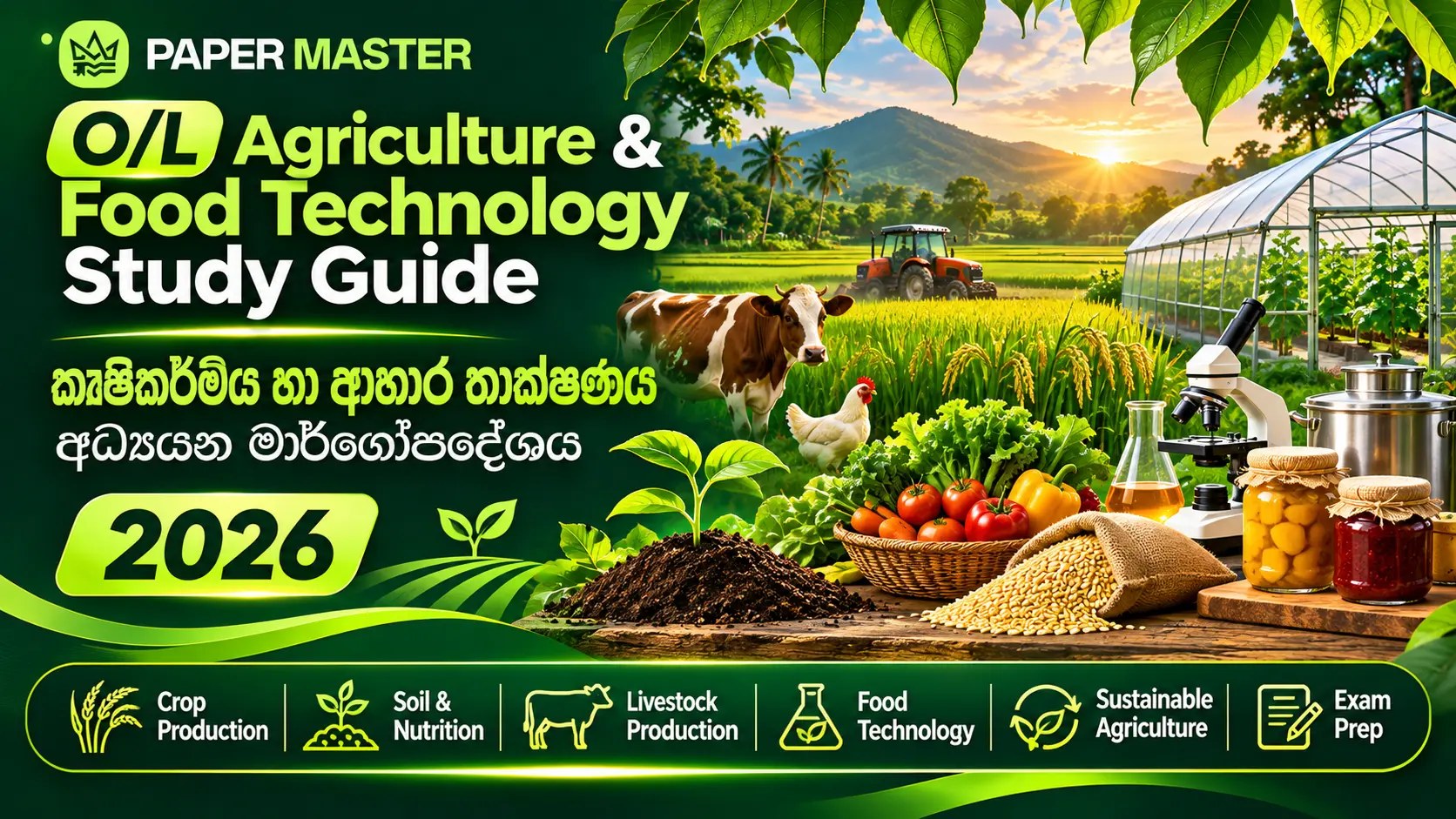
A complete O/L Agriculture & Food Technology Study Guide for Sri Lankan students covering crop production, soil, plant nutrition, livestock, food processing, preservation, agricultural technology, sustainability, past paper practice and exam preparation for the 2026 examination.
O/L Agriculture & Food Technology Study Guide 2026
This O/L Agriculture & Food Technology Study Guide is designed to help Sri Lankan students revise the important agricultural and food technology concepts required for the G.C.E. Ordinary Level examination.
The subject becomes easier when students connect scientific concepts with real farming practices, food production and everyday agricultural activities instead of simply memorizing facts.
What You Will Learn
Importance of agriculture
Soil and soil management
Plant growth and nutrition
Crop production
Pest and disease management
Irrigation and water management
Livestock production
Agricultural tools and technology
Food processing
Food preservation
Food safety and hygiene
Sustainable agriculture
Past paper preparation
Exam time management
1. Importance of Agriculture
Agriculture plays an important role in food production, employment and the economy.
Students should understand how agriculture contributes to:
Connect each agricultural concept with examples from Sri Lanka.
Real-life examples can make your answers clearer and easier to remember.
2. Soil and Its Importance
Soil provides plants with water, nutrients and physical support.
Students should understand:
Soil formation
Soil texture
Soil structure
Soil fertility
Soil moisture
Soil organisms
Soil pH
Organic matter
Different crops may require different soil conditions for healthy growth.
3. Soil Conservation
Soil is an important natural resource and should be protected.
Methods of reducing soil degradation may include:
Contour farming
Mulching
Cover crops
Terracing
Proper drainage
Maintaining vegetation
Adding organic matter
Revision Tip
For each soil conservation method, understand both how it works and why it is useful.
4. Plant Nutrition
Plants require nutrients for healthy growth and development.
Important plant nutrients include:
Nitrogen
Phosphorus
Potassium
Other essential mineral nutrients
Students should understand:
Functions of nutrients
Nutrient deficiencies
Organic fertilizers
Inorganic fertilizers
Compost
Proper fertilizer application
Avoid memorizing nutrient names only. Learn their basic functions as well.
5. Crop Production
Crop production involves several stages from land preparation to harvesting.
Important areas include:
Selecting suitable crops
Land preparation
Seed selection
Planting
Irrigation
Fertilization
Weed control
Pest management
Harvesting
Post-harvest handling
Important Tip
Learn the correct sequence of activities involved in crop production.
6. Seeds and Plant Propagation
Plants can be propagated using seeds or vegetative methods.
Students should understand:
Seed selection
Seed germination
Seed viability
Nurseries
Cuttings
Grafting
Budding
Other vegetative propagation methods
The most suitable propagation method depends on the type of crop.
7. Irrigation and Water Management
Water is essential for plant growth.
Students should understand different methods of supplying water to crops and the importance of efficient water use.
Important areas include:
Irrigation
Drainage
Water conservation
Rainwater use
Avoiding water wastage
Preventing waterlogging
Water Management Tip
Both too little water and too much water can negatively affect crops.
8. Weeds, Pests and Diseases
Weeds, pests and diseases can reduce crop productivity.
Students should understand basic control methods such as:
Cultural control
Biological control
Mechanical control
Chemical control
Integrated pest management
Safe and responsible control methods should be given priority.
9. Livestock Production
Livestock farming contributes food, income and useful agricultural products.
Students should understand basic areas related to:
Cattle
Poultry
Goats
Other farm animals
Housing
Feeding
Breeding
Health management
Cleanliness
Animal welfare
Important Tip
Good livestock management requires suitable food, clean water, proper housing and disease prevention.
10. Agricultural Tools and Machinery
Agricultural tools and machinery help reduce labour and improve efficiency.
Students should understand the use and maintenance of basic tools and equipment.
Important ideas include:
Selecting the correct tool
Safe use
Cleaning
Storage
Maintenance
Preventing accidents
Always consider safety when answering questions about agricultural equipment.
11. Agricultural Technology
Modern technology is increasingly used in agriculture.
Examples may include:
Mechanization
Greenhouses
Improved irrigation
Sensors
Protected cultivation
Improved planting materials
Digital information systems
Students should understand how technology can improve productivity and resource efficiency.
12. Food Technology
Food technology involves applying scientific knowledge to the production, processing and storage of food.
Important areas include:
Food processing
Food preservation
Packaging
Storage
Food quality
Food safety
Food technology can help increase shelf life and reduce food waste.
13. Food Preservation
Food preservation helps slow spoilage and maintain food quality for longer periods.
Common methods include:
Drying
Refrigeration
Freezing
Heating
Bottling
Canning
Using sugar or salt
Suitable packaging
Important Tip
Understand why each preservation method reduces or slows food spoilage.
14. Food Safety and Hygiene
Food should be prepared, handled and stored safely.
Important practices include:
Washing hands
Using clean equipment
Keeping raw and cooked foods separate
Proper storage
Safe water
Protecting food from pests
Maintaining clean preparation areas
Checking food quality
Poor food hygiene can lead to contamination and illness.
15. Food Packaging and Storage
Packaging helps protect food during storage and transportation.
Students should understand the importance of:
Protection from contamination
Preventing physical damage
Maintaining quality
Providing product information
Safe storage
Suitable storage conditions
Different foods require different packaging and storage methods.
16. Sustainable Agriculture
Sustainable agriculture aims to produce food while protecting natural resources for the future.
Important practices may include:
Soil conservation
Efficient water use
Composting
Crop rotation
Reducing unnecessary chemicals
Protecting biodiversity
Responsible waste management
Sustainability Tip
A good agricultural practice should consider productivity, the environment and long-term resource use.
17. Agricultural Environment
Agricultural activities depend heavily on environmental factors.
Students should understand the influence of:
Temperature
Rainfall
Sunlight
Soil
Water
Topography
Climate
Changes in environmental conditions can affect crop and livestock production.
18. Agricultural Business and Marketing
Agriculture also involves business activities.
Students should understand basic ideas such as:
Production costs
Selling agricultural products
Markets
Transportation
Packaging
Product quality
Reducing post-harvest losses
Good planning can help farmers improve both productivity and income.
19. Past Paper Practice
Past paper practice is one of the best ways to prepare for the O/L Agriculture & Food Technology examination.
Try to:
Complete past papers regularly
Practice multiple-choice questions
Practice structured questions
Revise diagrams
Review practical concepts
Identify weak areas
Check incorrect answers
Complete papers within the available time
Past papers help students understand how both agricultural theory and practical knowledge are tested.
Common Mistakes to Avoid
Memorizing facts without understanding them
Confusing plant nutrients
Mixing up pest and disease control methods
Ignoring safety procedures
Giving incomplete practical explanations
Confusing food processing and food preservation
Not using suitable agricultural examples
Spending too much time on one question
Exam Preparation Tips
Create a weekly revision plan
Study one topic at a time
Prepare short notes
Practice important diagrams
Learn agricultural examples
Revise food preservation methods
Practice structured answers
Complete past papers
Review your mistakes
Manage examination time carefully
Final Advice
Agriculture & Food Technology becomes easier when you connect textbook concepts with farming, food production and everyday life.
Focus on understanding how plants grow, how resources are managed, how food is produced safely and how modern technology improves agricultural activities.
Regular revision, practical examples and past paper practice will help improve both your knowledge and confidence before the examination.
Use PaperMaster.lk to access past papers, model papers, study guides and educational resources for your O/L examination preparation.
Good luck with your studies and your 2026 O/L examination!